Top 12 PPC Advertising Platforms for DTC & Ecommerce in 2026
In ecommerce, paid media is about investing capital into the right channels to find your next best customer. The ecosystem of PPC advertising platforms, however, is more fragmented and complex than ever. Deciding between the intent-driven powerhouse of Google, the creative-led universe of Meta, or the cultural engine of TikTok will determine your growth trajectory. This guide cuts through the noise.
We aren't just listing platforms; we're providing a strategic playbook for founders, performance teams, and agencies. This resource dissects the 12 most critical PPC advertising platforms, analyzing each through the lens of real-world use cases, targeting strengths, honest limitations, and crucial integration points for your tech stack, including Shopify. Every entry includes direct links and screenshots to give you a clear view of the user experience.
The goal is to help you move beyond dashboards and gut feelings, building a diversified media mix that drives profitable growth. We'll also touch on how tools like SpendOwlAI can help manage this complexity, turning performance data from platforms like Meta and Google into clear, actionable daily priorities. This helps prevent wasted ad spend and allows you to scale with confidence. This list is your blueprint for choosing where to allocate your budget effectively.
1. Google Ads
Google Ads is the definitive intent-driven advertising marketplace, making it an essential platform for nearly any business aiming to capture active demand. Its strength lies in connecting advertisers with users at the exact moment they are searching for a product, service, or solution. For direct-to-consumer (DTC) and ecommerce brands, it offers unparalleled depth, particularly through its Search and Shopping campaigns which are built to drive bottom-funnel conversions.
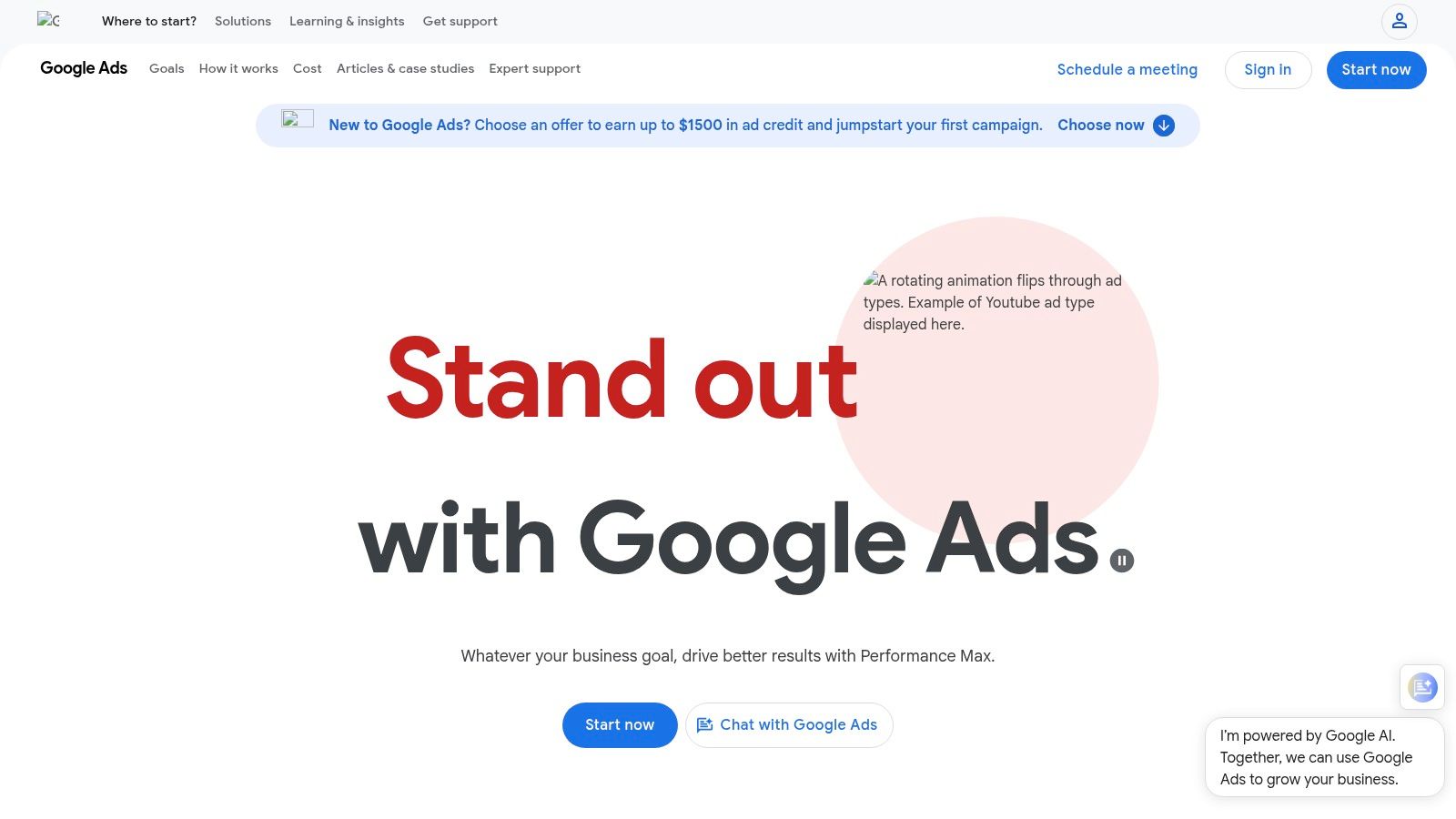
The platform’s integration with Google Merchant Center is a game-changer for ecommerce, allowing for detailed, SKU-level performance tracking via product feeds. This capability powers both traditional Shopping ads and the increasingly dominant Performance Max (PMax) campaigns. PMax automates ad delivery across Google’s entire inventory-Search, YouTube, Display, Discover, Gmail, and Maps-using your product feed and audience signals to find customers. While this automation is powerful, it requires careful setup, especially with asset groups and exclusion lists, to maintain control over brand messaging and budget allocation.
Use Cases & Implementation
Best For: DTC brands needing to capture high-intent search traffic, ecommerce stores with large product catalogs, and businesses of all types looking for scalable customer acquisition.
Budget Guidance: While you can start with any budget, competitive niches may require a minimum of $50-$100 per day to gather meaningful data. Costs are CPC-based (Cost-Per-Click) and vary widely by keyword and industry.
Integration: Native integration with Shopify makes product feed sync simple. For a deeper analysis and to improve Google Ads performance, tools like SpendOwlAI can provide crucial SKU-level insights and budget guardrails that the native platform sometimes obscures.
Pros | Cons |
|---|---|
Unmatched scale and intent-based targeting | Automation can mask poor performance without diligent oversight |
Deep ecommerce tools for SKU-level optimization | High CPCs in mature and competitive categories |
Extensive campaign types for all funnel stages | Steep learning curve for manual campaign management |
Website: https://ads.google.com
2. Microsoft Advertising
Microsoft Advertising (formerly Bing Ads) is an essential secondary PPC advertising platform for capturing incremental, often lower-cost, search traffic. While its market share is smaller than Google's, it reaches a distinct audience segment through the Bing, Yahoo, and DuckDuckGo search engines. For many DTC and ecommerce advertisers, this translates into a source of profitable conversions from an audience that can be older, have a higher income, or be less saturated with competitor ads.
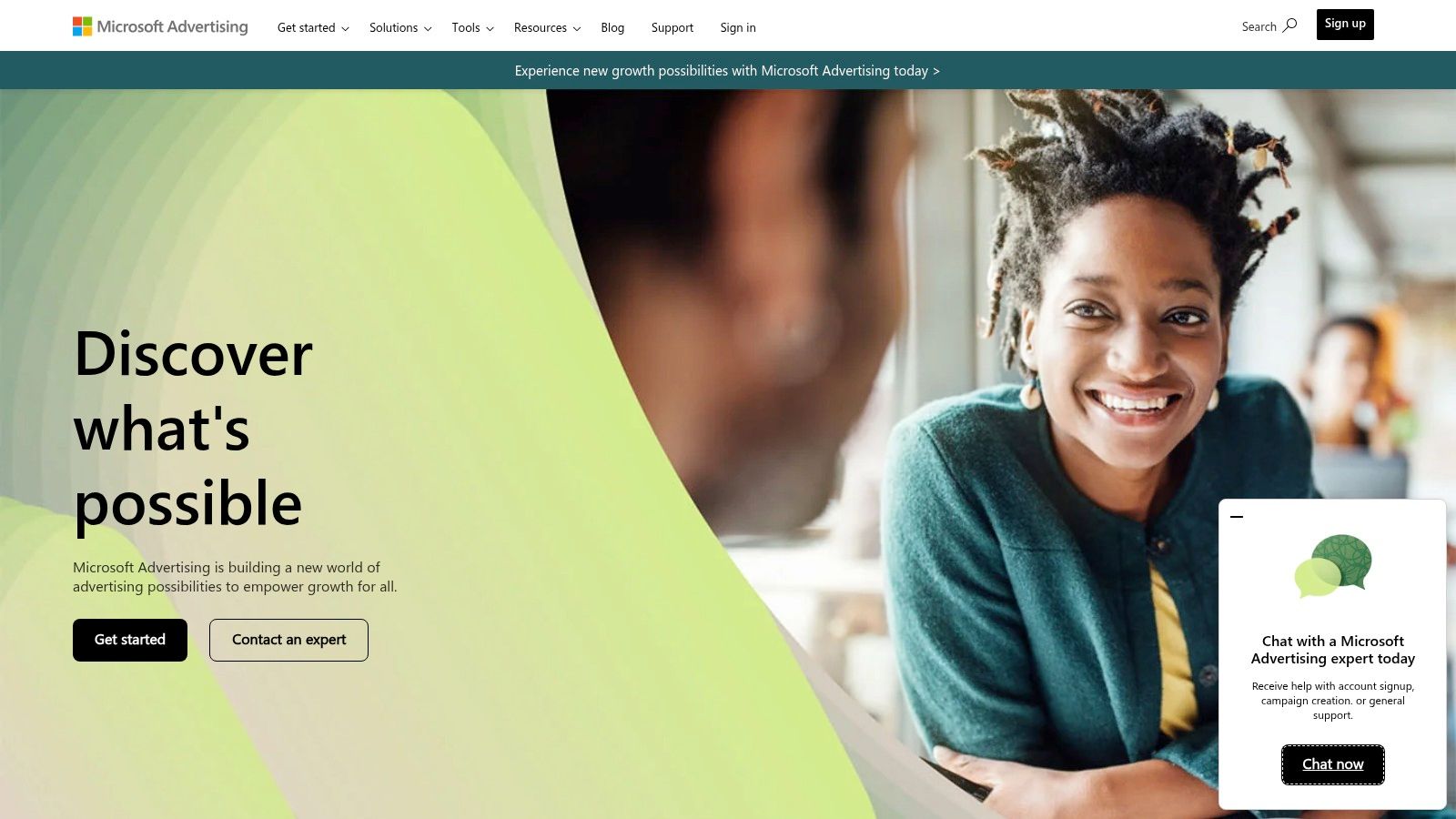
The platform’s greatest practical advantage is its seamless Google Ads import functionality. This allows advertisers to quickly mirror their successful Google campaigns, including structure, keywords, and ad copy, significantly reducing the setup time. Beyond search, its Audience Network provides native ad placements across a network of sites, offering a way to expand reach. Unique features like LinkedIn Profile Targeting (in select markets) allow for powerful B2B segmentation based on company, job function, and industry.
Use Cases & Implementation
Best For: Advertisers looking for incremental volume beyond Google, B2B companies, and brands targeting demographics that over-index on Microsoft properties.
Budget Guidance: A great starting point is to allocate 10-20% of your Google Ads budget to test performance. CPCs are often lower, making it an efficient channel to scale what’s already working. To manage spend effectively, it is critical to understand the nuances of keyword match types; understanding the difference between broad match vs. phrase match is key to controlling costs.
Integration: The Google Ads import tool is the primary method for rapid setup. Shopify integration is available through a dedicated app in the Shopify App Store, enabling product feed synchronization for Microsoft Shopping Campaigns.
Pros | Cons |
|---|---|
Often delivers lower CPCs and CPAs than Google | Lower overall search volume and market share |
Fast and easy setup via Google Ads import feature | Partner network quality can be inconsistent, requiring diligent monitoring |
Reaches a valuable, often less competitive, audience segment | Interface and features can sometimes lag behind Google Ads |
Website: https://about.ads.microsoft.com
3. Meta Ads (Facebook + Instagram via Ads Manager)
Meta Ads is the engine for discovery-based advertising, positioning it as a fundamental platform for brands focused on generating new demand. Its power comes from pairing a massive user base across Facebook and Instagram with a rich variety of creative formats designed to interrupt and engage. For direct-to-consumer (DTC) brands, it’s an indispensable tool for top-of-funnel prospecting and building audiences at scale, using visually compelling ads in formats like Reels, Stories, and Carousels.
The platform's strength in ecommerce is amplified by its catalog-driven ad types, such as Dynamic Product Ads (DPAs) and Collections. These ads automatically showcase relevant products to users based on their on-site behavior, making them highly effective for retargeting. The introduction of Advantage+ Shopping Campaigns (ASC) has further automated audience targeting and ad delivery, using machine learning to find high-value customers. However, effective use depends heavily on clean data from the Meta Pixel and Conversions API (CAPI), as signal quality directly impacts performance.
Use Cases & Implementation
Best For: DTC brands needing to build brand awareness and drive product discovery, businesses with visually appealing products, and advertisers focused on powerful dynamic retargeting.
Budget Guidance: A starting budget of $50 per day per campaign is often recommended to exit the learning phase efficiently. Costs are CPM-based (Cost-Per-Mille) and are influenced by audience competition, creative quality, and seasonality.
Integration: Shopify offers a direct integration for syncing product catalogs and setting up the Meta Pixel/CAPI. To optimize campaign performance and understand true profitability, it is crucial to scale Facebook Ads with a clear strategy, focusing on creative testing and data analysis.
Pros | Cons |
|---|---|
Massive reach with creative-led performance | Performance is sensitive to signal quality (pixel/CAPI) |
Strong retargeting with catalog-driven ad formats | Frequent platform changes can create campaign instability |
Effective for new customer acquisition and discovery | Automation can obscure which audiences or creatives are performing |
Website: https://www.facebook.com/business/ads
4. TikTok for Business
TikTok for Business has become a vital platform for discovery-based advertising, moving beyond brand awareness to become a significant driver of direct response. Its strength is an algorithm that excels at connecting advertisers with highly engaged audiences through short-form video. For DTC and ecommerce brands, it offers a powerful way to generate efficient top-funnel reach and mid-funnel consideration, with increasing capabilities for bottom-funnel conversions, especially when creative is authentic to the platform's culture.
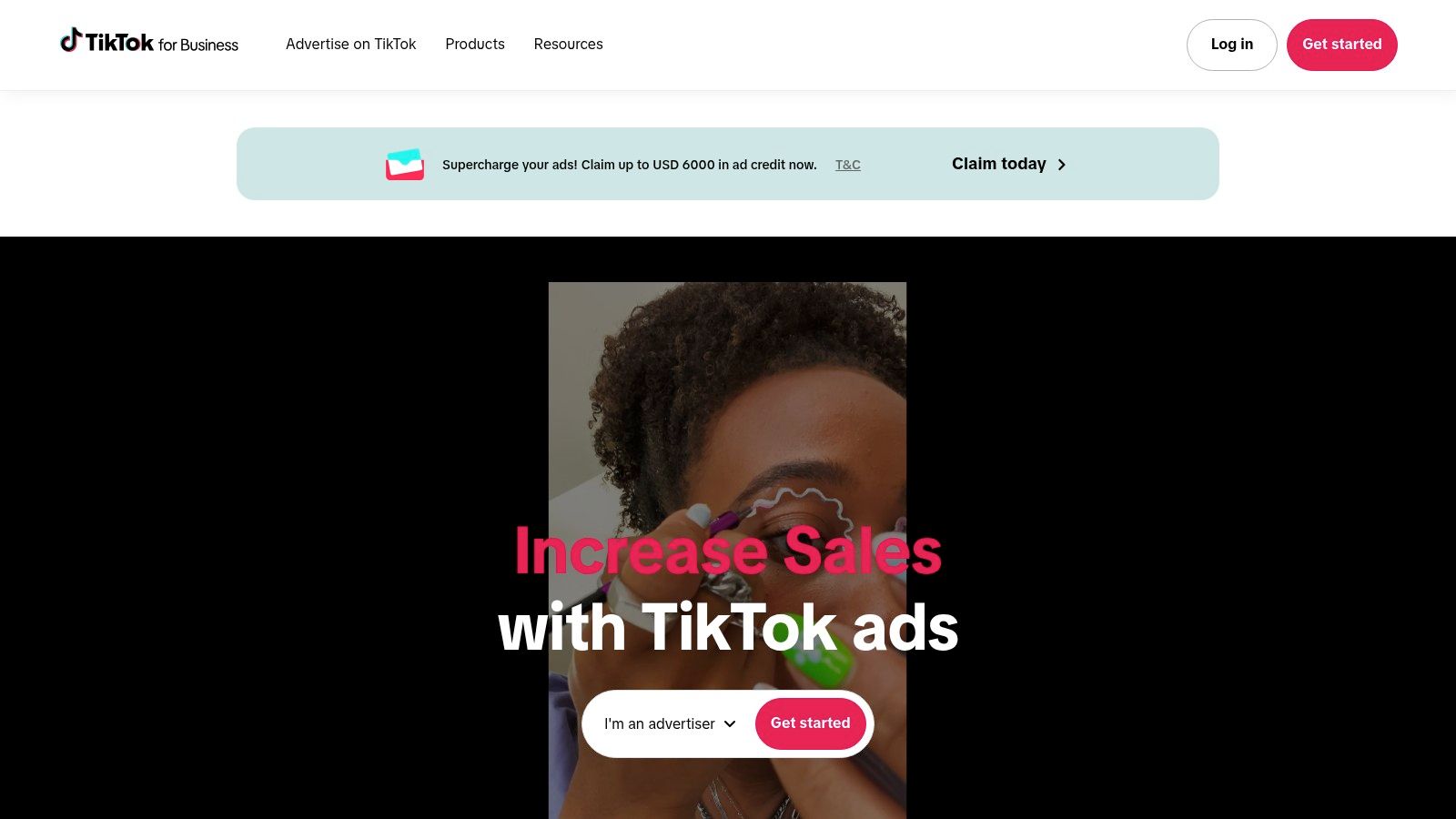
The platform's success hinges on creative that feels native, not like a traditional ad. Key features include In-Feed Ads, Spark Ads (which boost organic posts), and catalog-enabled product ads for direct shopping experiences. The TikTok Creator Marketplace facilitates partnerships, providing a direct line to content creators who understand the platform's trends. Optimizing performance requires a solid setup of the TikTok Pixel and Events API to feed the algorithm conversion data, making it smarter over time. This makes it one of the most dynamic ppc advertising platforms for creative testing.
Use Cases & Implementation
Best For: DTC brands aiming for scalable prospecting, creative testing, and reaching younger demographics. It's effective for both top-of-funnel lift and increasingly for direct conversions.
Budget Guidance: You can start with as little as $20 per day per ad set, but a budget of $50-$100 per day provides more data for the algorithm to optimize effectively. Costs are typically CPM-based (Cost-Per-Mille) and are often lower than other platforms.
Integration: A native Shopify integration simplifies pixel setup and product catalog sync. For performance analysis, feeding TikTok data into a central tool like SpendOwlAI allows you to compare its impact on blended ROAS alongside platforms like Meta and Google.
Pros | Cons |
|---|---|
High thumb-stop rates and scalable prospecting with native creative | Creative-heavy lift; creative fatigue can set in quickly |
Robust creator ecosystem to accelerate content production | Brand safety and policy enforcement can be uneven for some advertisers |
Often lower media costs (CPM) compared to more mature platforms | Attribution can be challenging to measure against last-click models |
Website: https://ads.tiktok.com/business/en-US
5. LinkedIn Ads
LinkedIn Ads is the premier B2B advertising network, offering unmatched precision for reaching professional audiences. Its core strength is its ability to target users based on detailed firmographic and professional data like job title, company size, industry, and specific skills. This makes it a crucial platform for businesses with high average contract values (ACV), B2B ecommerce operations, wholesale channels, or any company where reaching a specific decision-maker is more important than mass-market appeal.
The platform excels at generating high-quality leads through its native Lead Gen Forms, which pre-fill with a user's profile information, simplifying the conversion process for gated content and demos. Campaign types like Sponsored Content (in-feed ads) and Message Ads allow advertisers to engage prospects in a professional context. While its focus is distinctly B2B, its ability to target by company makes it a powerful, if niche, tool for DTC brands executing employee discount programs or corporate gifting campaigns.
Use Cases & Implementation
Best For: B2B SaaS, enterprise sales, wholesale ecommerce, and high-ticket service providers needing to target specific professional roles or companies.
Budget Guidance: Costs are notably higher than on consumer platforms. Expect Cost-Per-Click (CPC) to start at $5-$10 and Cost-Per-Lead (CPL) to range from $50-$200+, depending on the seniority and demand for the target audience.
Integration: Offers robust CRM integrations (HubSpot, Salesforce) to track leads through the sales funnel. Offline conversion tracking is essential for connecting ad spend to closed deals, providing a clearer picture of ROI for long sales cycles.
Pros | Cons |
|---|---|
Unrivaled professional targeting for B2B decision-makers | Significantly higher CPCs and CPLs than consumer social platforms |
Lead Gen Forms convert well for gated offers and demos | Audience scale can be limited outside of major professional industries |
Strong for account-based marketing (ABM) strategies | Less effective for low-price, high-volume consumer products |
Website: https://business.linkedin.com/advertise
6. X Ads (formerly Twitter)
X Ads positions itself as a conversation-centric advertising platform, ideal for brands aiming to connect with audiences around real-time topics like news, tech, finance, and sports. Its strength is in its immediacy, allowing advertisers to join timely discussions and associate their message with current events. For content-led performance marketing, it offers a unique angle where well-crafted threads and videos can drive engagement and conversions by resonating with active, vocal communities.
The platform’s Ads Manager provides standard campaign objectives such as website clicks, conversions, video views, and app promotions. While its tooling may not have the same depth as Meta or Google, its core value lies in audience context. Advertisers can achieve niche wins by targeting users engaged in specific conversations, making it a valuable secondary channel for reaching tech-savvy, finance-focused, or culturally-attuned demographics. The Ads API and account roles also provide necessary workflow management for agencies.
Use Cases & Implementation
Best For: Brands in tech, crypto, finance, and media; event-driven marketing campaigns; and content-first strategies aiming to build community.
Budget Guidance: Costs are typically objective-based (CPC, CPM, CPV). A test budget of $20-$40 per day can be sufficient to gauge initial traction, but scaling requires a clear understanding of which niche conversations to target.
Integration: While direct ecommerce integrations are less common, performance can be tracked via the X Pixel. Measuring its true impact often requires analyzing assisted conversions in tools like Google Analytics, as its influence is frequently top-of-funnel.
Pros | Cons |
|---|---|
Niche wins in tech, crypto, and event-driven campaigns | Brand suitability and platform stability concerns for some |
Real-time resonance can lower costs for timely offers | Tooling and analytics are less mature than Meta and Google |
Strong for building community and top-of-funnel engagement | Attribution can be challenging to measure directly |
Website: https://business.x.com/en/advertising
7. Pinterest Ads
Pinterest Ads operates as a visual discovery engine where users actively plan future purchases, making it a powerful mid-funnel platform. It stands apart from other social channels because its audience is not just scrolling for entertainment; they are curating ideas and researching products for specific life moments, projects, and purchases. This "planning" mindset is especially valuable for brands in the home, fashion, beauty, food, and gifting verticals.
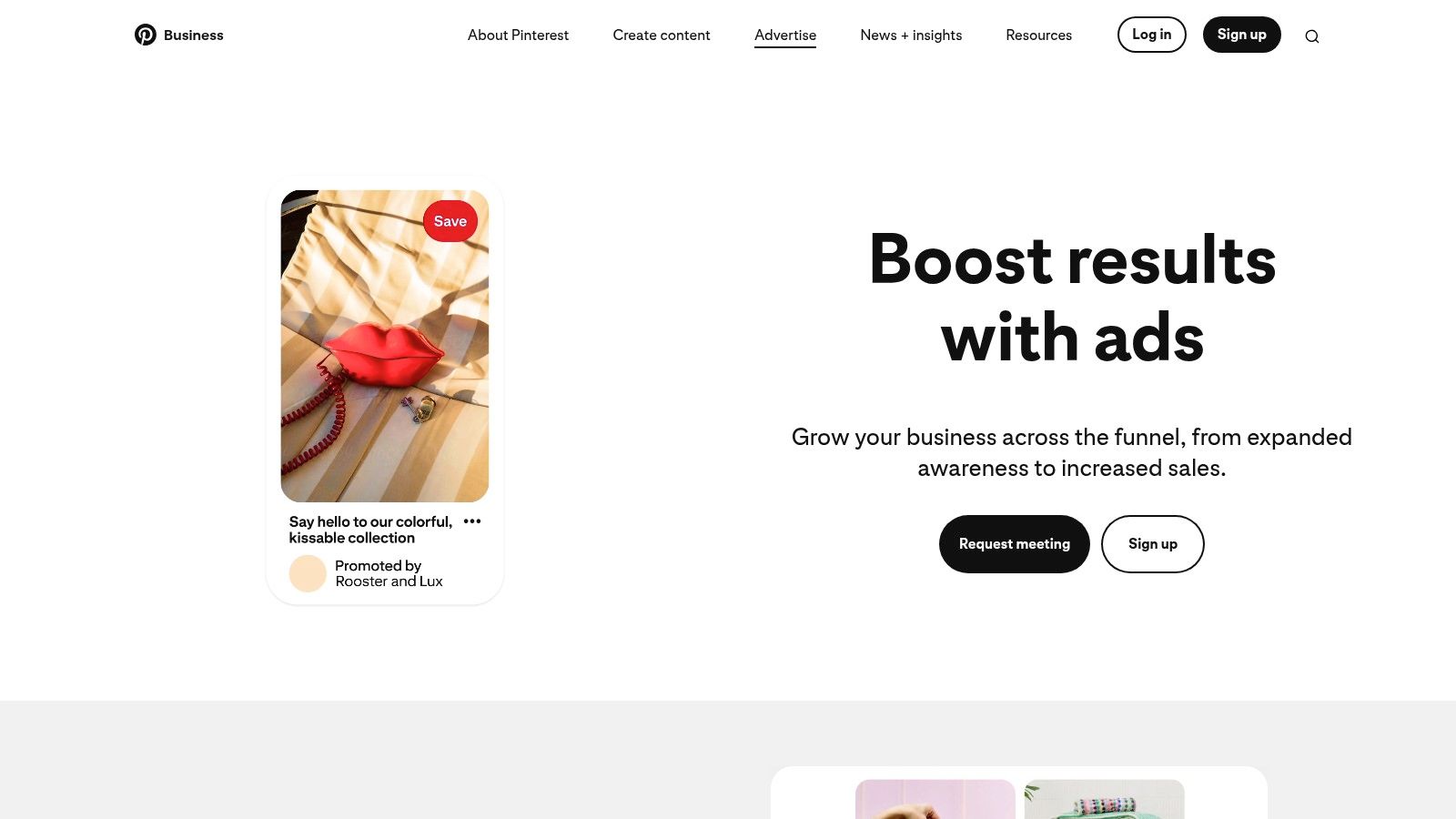
The platform’s strength for ecommerce is its seamless product catalog integration. By syncing a product feed, brands can create dynamic Shopping ads, tag products directly in visual Pins, and build retargeting campaigns that feel native to the user experience. Success on Pinterest hinges on creating aesthetically pleasing, high-quality creative that aligns with the platform’s visual-first culture. Standard Pins, Video Pins, and Carousel ads can all be effective when they provide inspiration or solve a problem for the user, rather than just pushing a hard sell. It is a key channel in the broader mix of ppc advertising platforms for visually-driven brands.
Use Cases & Implementation
Best For: DTC brands in visual niches (e.g., home decor, fashion, recipes, DIY) aiming to build an audience and drive consideration-phase traffic.
Budget Guidance: CPMs are often lower than on other social platforms. A starting budget of $20-$40 per day can be effective for testing creative and audiences. Costs are typically CPM or CPC-based.
Integration: Shopify offers a native Pinterest channel for easy catalog syncing. While Pinterest's own analytics are improving, using a third-party tool can help contextualize its performance alongside other channels like Google and Meta.
Pros | Cons |
|---|---|
Audience has high purchase intent and longer consideration windows | Requires high-quality, platform-specific creative to be effective |
Strong shopping formats that mirror catalog merchandising | Scale can be limited compared to larger social platforms |
Less ad saturation and lower costs in some categories | Attribution can be challenging as it's often a mid-funnel touchpoint |
Website: https://business.pinterest.com/advertise/
8. Snapchat for Business
Snapchat for Business is a creative-first, camera-native advertising channel ideal for reaching Gen Z and Millennial audiences. It stands out among PPC advertising platforms for its focus on immersive, short-form video and augmented reality (AR) experiences. For direct-to-consumer brands targeting younger demographics, it provides a unique opportunity to build brand affinity and drive action through highly engaging formats.
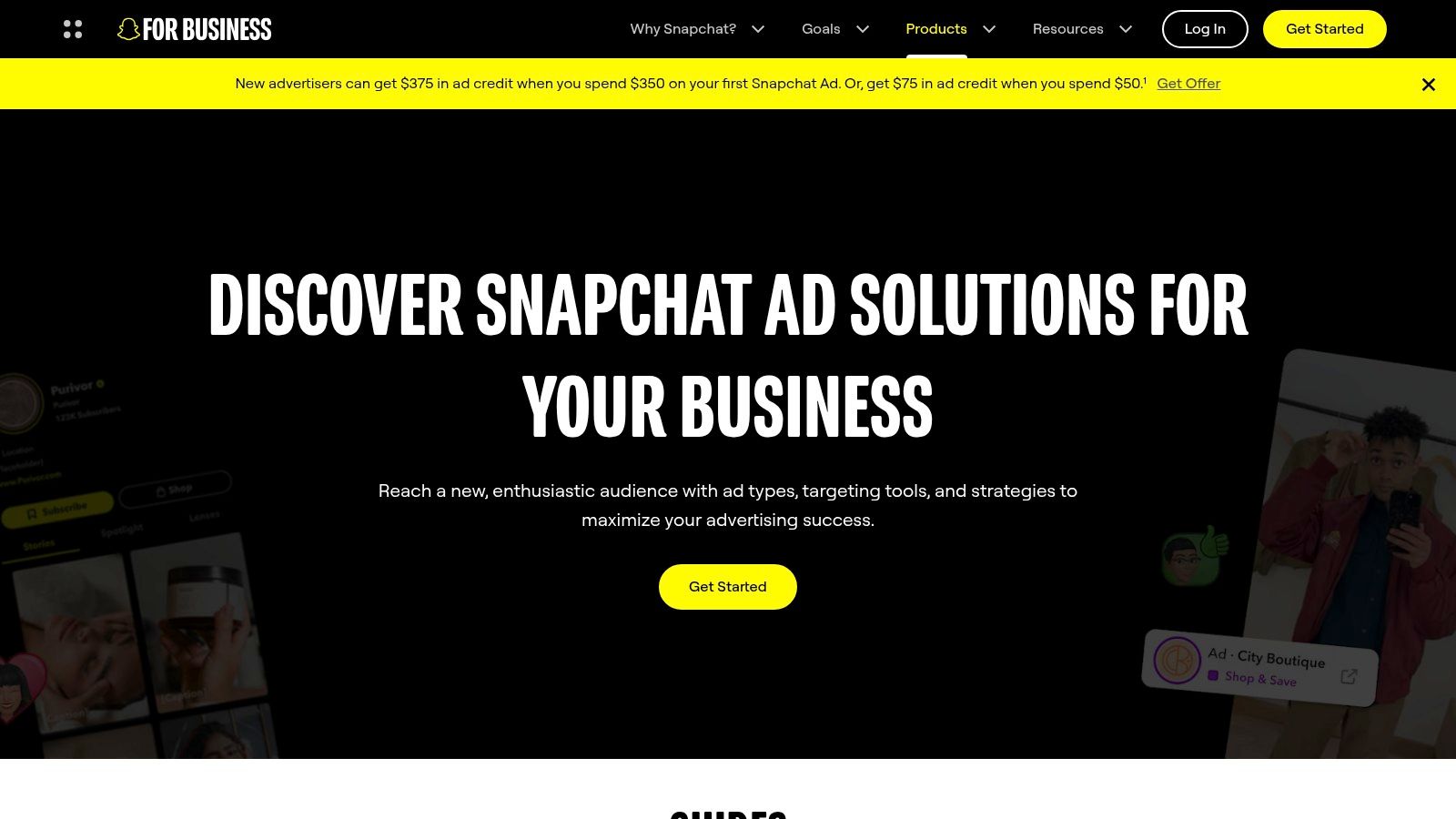
The platform’s strength is in its specialized ad units like AR Lenses, which allow for virtual try-ons, and Collection Ads that showcase multiple products in a single, shoppable format. These tools help bridge the gap between discovery and purchase in a way that feels native to the user experience. While it can drive direct conversions, Snap is often most effective for top- and mid-funnel goals, such as generating leads with its native forms, promoting app installs, or building audiences for retargeting on other platforms.
Use Cases & Implementation
Best For: Creative DTC brands, fashion and beauty companies using virtual try-ons, and businesses running seasonal promotions or product drops for younger audiences.
Budget Guidance: You can start with as little as $5 per day, but a budget of $30-$50 per day is recommended to effectively test creative and audiences. Costs are CPM-based (Cost-Per-Thousand-Impressions).
Integration: A native Shopify integration simplifies connecting your product catalog and tracking pixel events. For accurate attribution, the Conversions API is essential, sending server-side data to complement pixel tracking.
Pros | Cons |
|---|---|
Efficient reach to younger, highly engaged buyers | Creative assets require frequent refreshing to avoid ad fatigue |
High engagement with unique AR and interactive ad formats | Conversion volume and ROAS can be lower than Meta or Google for some ecommerce brands |
Lead Gen forms reduce friction for capturing user information | Audience is more niche compared to broader platforms |
Website: https://forbusiness.snapchat.com/advertising
9. Reddit Ads
Reddit Ads offers a unique approach to PPC advertising, placing brands directly within hyper-specific, community-based discussions. Its power comes from targeting users based on their active participation in niche subreddits, which are self-selected communities organized around countless interests, hobbies, and needs. This makes it one of the few ppc advertising platforms where advertisers can connect with passion-driven audiences in a contextually relevant and authentic way.
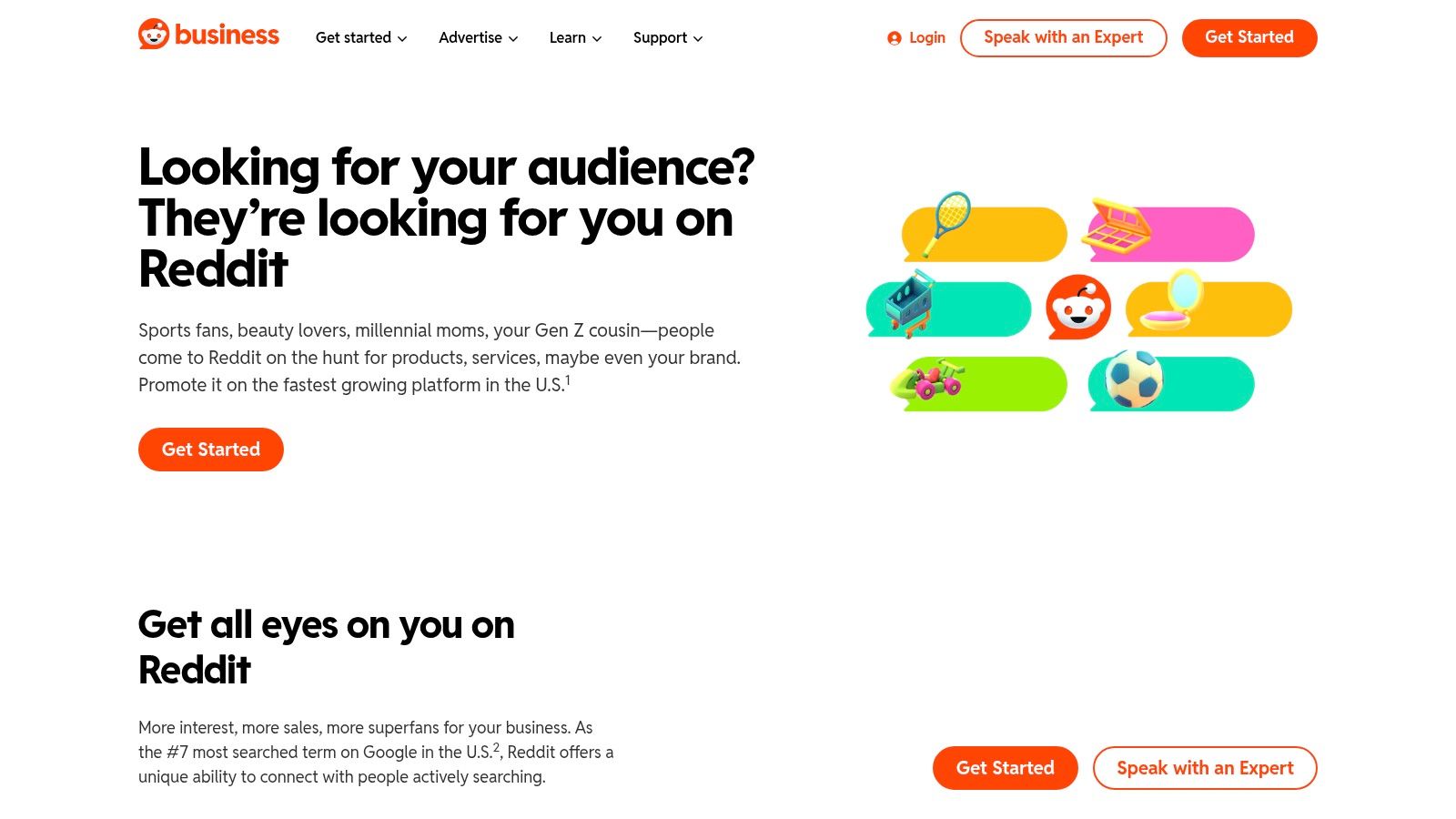
Success on Reddit requires advertisers to respect and mirror community norms. Creative that feels like a genuine contribution, rather than a disruptive ad, performs best. The platform allows for Promoted Posts in image, video, and carousel formats, with the option to enable comments. This feature provides a direct, qualitative feedback loop, offering raw insights into how a brand's messaging is perceived. However, this also means creative must be carefully considered to earn credibility and avoid negative reactions from discerning community members.
Use Cases & Implementation
Best For: DTC brands with products that align with specific hobbies or communities, advertisers seeking direct audience feedback, and campaigns targeting niche, high-intent user groups.
Budget Guidance: You can start with as little as $5 per day. Costs are managed on a CPC or CPM (Cost-Per-Mille) basis, which are generally lower than more competitive platforms, but performance can be less consistent.
Integration: While direct ecommerce integrations are limited, performance data can be passed to analytics platforms via tracking pixels. Effective management often involves manual curation of subreddit placements and exclusion lists to protect brand safety and improve ROI.
Pros | Cons |
|---|---|
Access to niche, self-selecting intent communities | Creative must earn credibility within communities |
Qualitative feedback loops from comments and engagement | Conversion performance can be volatile without tight targeting and curation |
Generally lower media costs than major platforms | Requires a deep understanding of subreddit culture to be effective |
Website: https://www.business.reddit.com/advertise
10. Amazon Ads (Retail Media)
Amazon Ads has become a cornerstone of PPC advertising platforms, especially for any brand selling on its marketplace. It represents the largest and most powerful retail media network, giving advertisers direct access to a massive audience with extremely high commercial intent. The platform’s key advantage is its ability to place products directly in front of shoppers at the final stages of their purchase journey, from search results to competitor product detail pages.
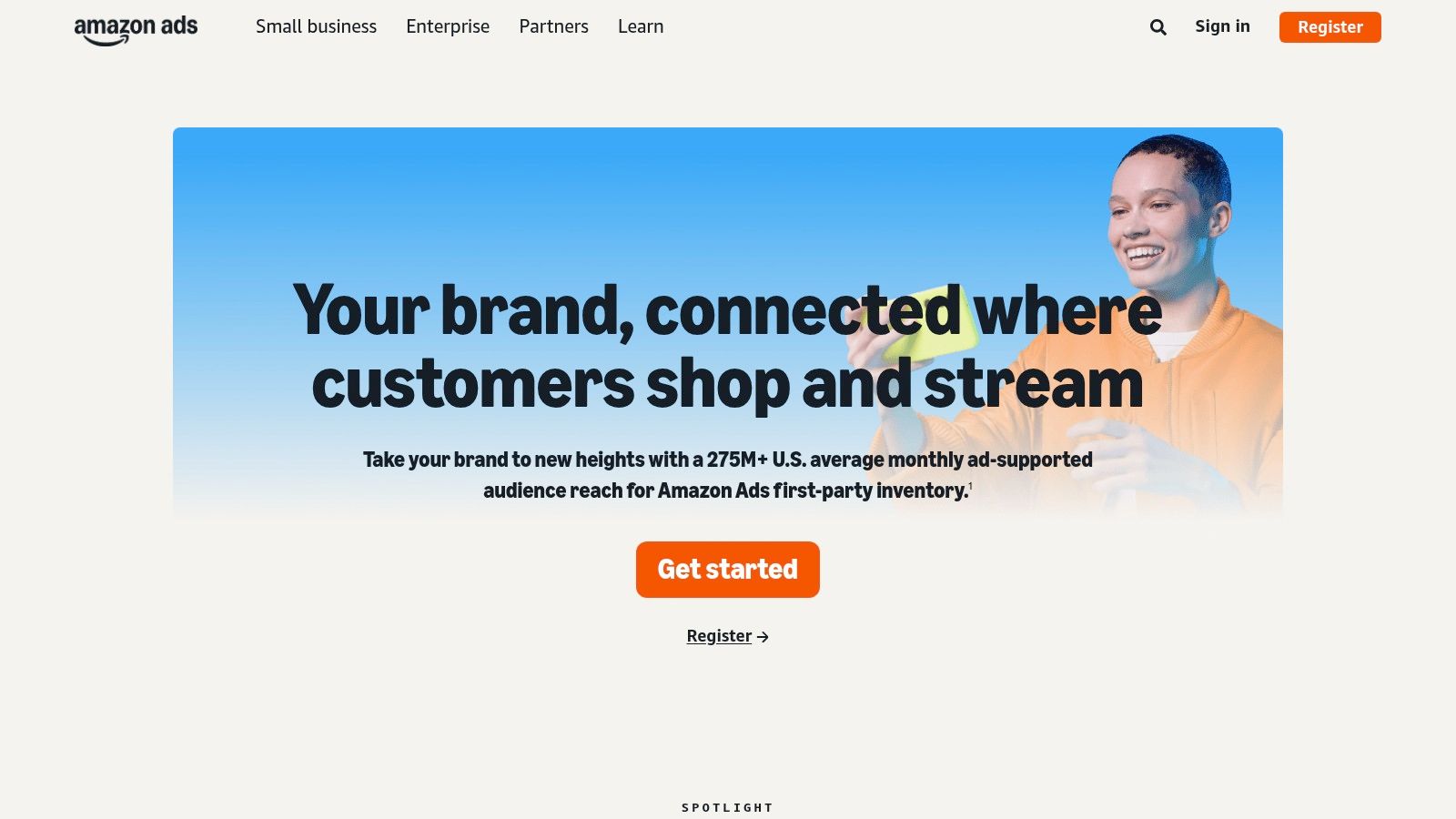
The ecosystem is built around three core ad types: Sponsored Products, Sponsored Brands, and Sponsored Display. Sponsored Products are the most common, appearing in search results and on product pages, and are essential for driving discoverability and sales. Sponsored Brands build top-of-funnel awareness, while Sponsored Display allows for retargeting both on and off Amazon. All campaign performance is measured against actual retail data, providing clear attribution and a direct line from ad spend to sales. Success on the platform is deeply connected to your retail readiness; high-quality product detail pages, positive reviews, and strong inventory management are prerequisites for effective campaigns.
Use Cases & Implementation
Best For: Any brand selling on Amazon, DTC companies using Amazon as a primary sales channel, and advertisers looking to influence customers at the point of purchase.
Budget Guidance: CPCs are highly competitive. A starting budget of $30-$50 per day per key product can provide initial data, but scaling requires significant investment, especially in popular categories.
Integration: The platform is natively integrated with the Amazon Seller Central and Vendor Central ecosystems. Performance insights can be exported for analysis in external business intelligence tools to get a clearer picture of SKU-level profitability.
Pros | Cons |
|---|---|
High commercial intent at the point of purchase | Success depends on product detail page quality and reviews |
Granular SKU-level control and retail attribution | Competitive CPCs in popular categories can erode margins |
Direct measurement of ad spend to sales revenue | Reporting interface can be less intuitive than other platforms |
Website: https://advertising.amazon.com
11. Walmart Connect
Walmart Connect is a major retail media network that gives brands direct access to Walmart’s massive customer base. For any brand selling products through Walmart, it has become an essential channel, offering an alternative or complement to Amazon Ads. Its unique strength is connecting online advertising efforts with both e-commerce and in-store sales, providing a true omnichannel view of performance. This makes it one of the more interesting PPC advertising platforms for CPG and retail brands.
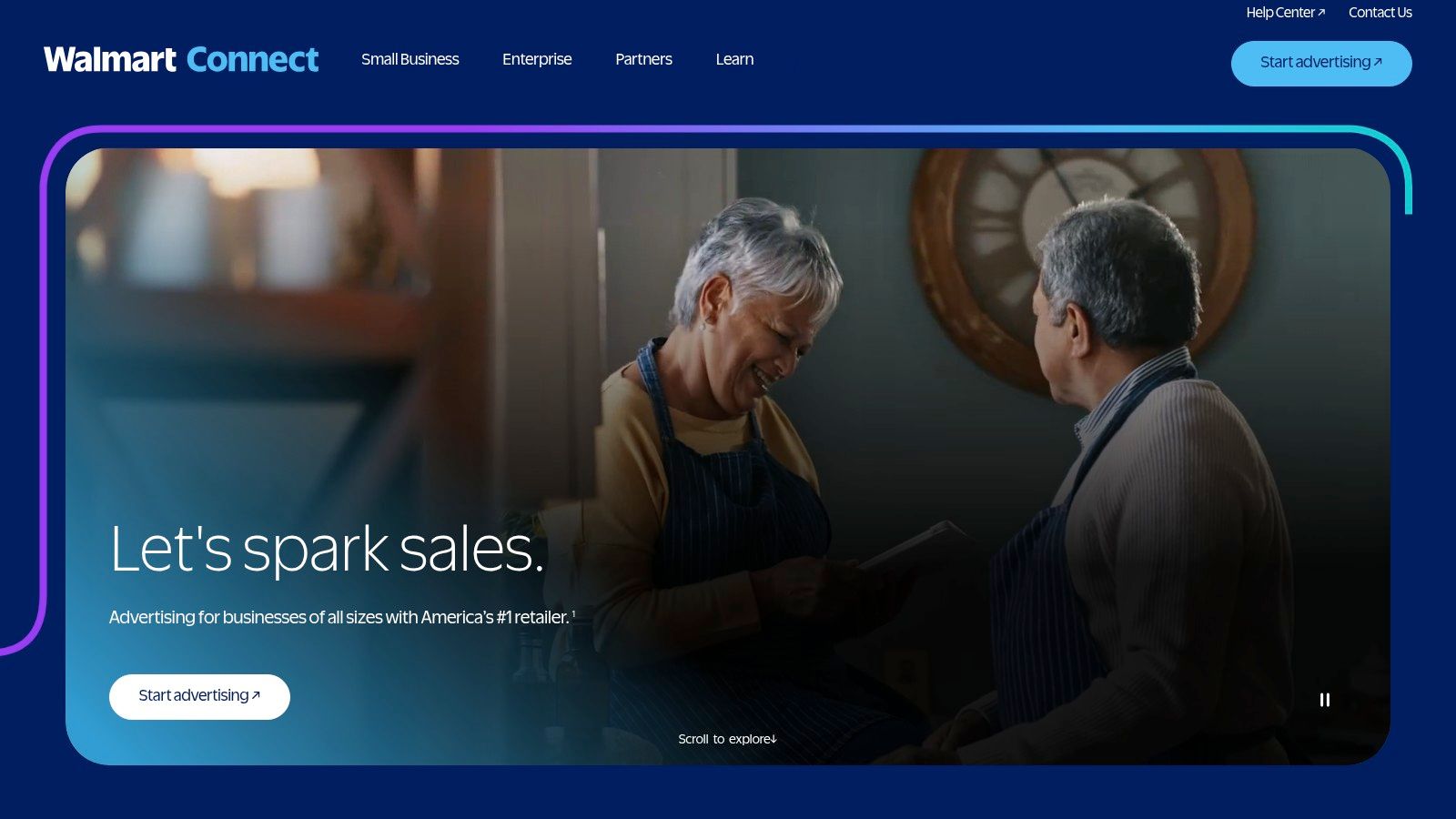
The platform’s core is Sponsored Search, allowing advertisers to bid for premium placement on Walmart.com search results. Beyond that, the Walmart DSP enables display advertising both on Walmart’s properties and across the open web, all powered by Walmart’s rich first-party shopper data. While the self-serve tools and API access are improving, the ecosystem still heavily favors brands with an established Walmart marketplace or 1P relationship, as performance is directly tied to your product's availability and retail readiness.
Use Cases & Implementation
Best For: CPG brands, electronics, and home goods sold in Walmart stores and online; advertisers looking for incremental reach beyond Amazon.
Budget Guidance: Sponsored Search campaigns are CPC-based. A starting budget of $30-$50 per day per key product line is a reasonable test, though this depends on category competition. Managed service display campaigns have higher minimums.
Integration: Requires a presence as a Walmart Seller or Supplier. Third-party ad management tools and agencies often provide the interface for running campaigns, especially for more complex DSP buys.
Pros | Cons |
|---|---|
Access to a huge U.S. shopper audience with strong first-party data | Ecosystem favors sellers with an established Walmart presence |
Omnichannel measurement connecting online ads to in-store sales | Advertising tools and reporting can be less mature than Amazon's |
Full-funnel advertising options from search to offsite display | Campaign success is highly dependent on retail operations (e.g., stock levels) |
Website: https://www.walmartconnect.com
12. Taboola
Taboola is a leading native advertising platform that specializes in placing content recommendations and video ads across a wide network of premium publisher websites. It's a key player for advertisers looking to scale top- and mid-funnel traffic outside of the major walled gardens like Google and Meta. By appearing as "recommended for you" content, Taboola ads blend into the user experience, making them effective for content commerce, lead generation, and driving new audiences to a brand’s ecosystem.
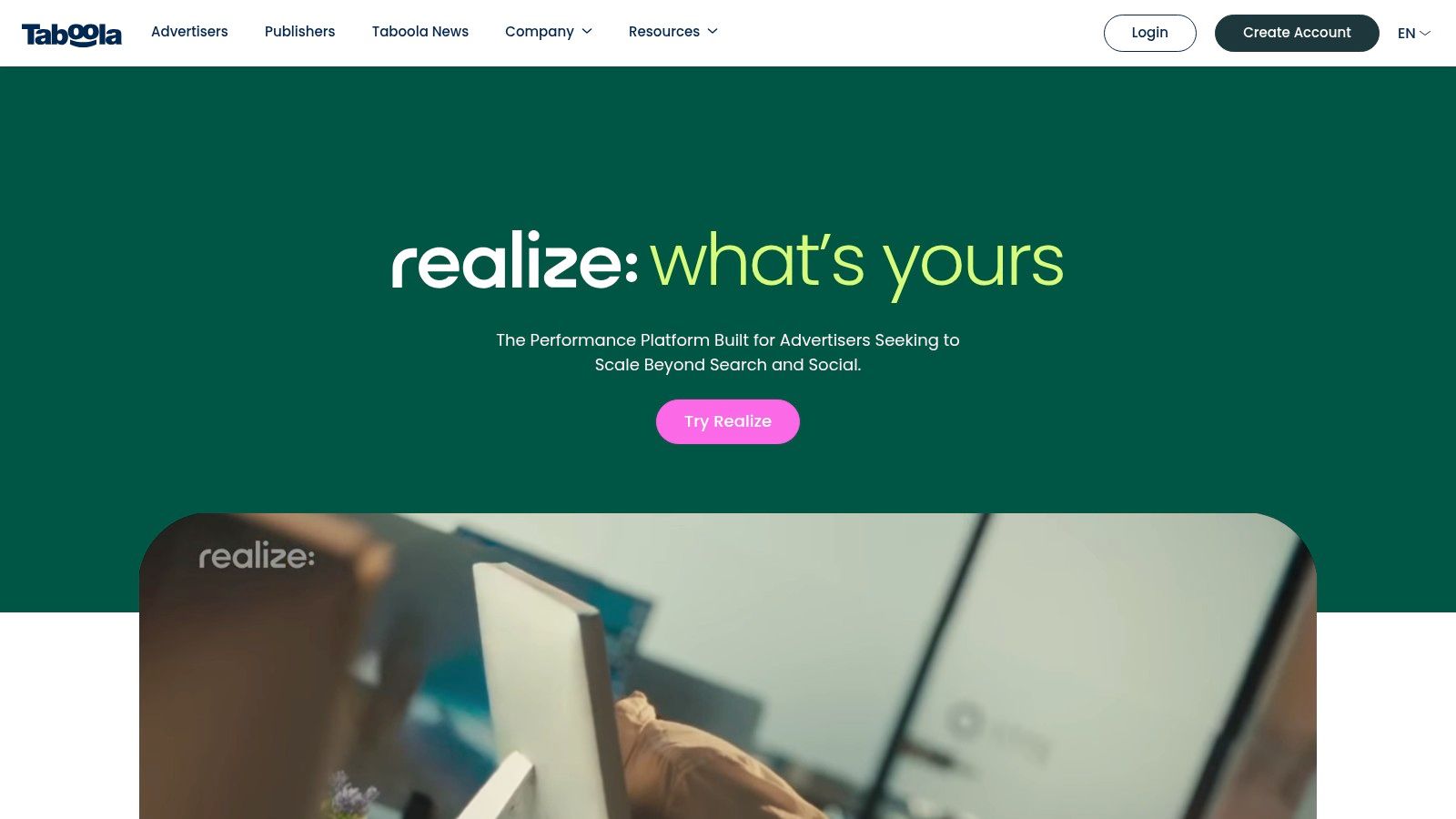
The platform operates on a CPC basis and gives advertisers control over which publisher sites their ads appear on, alongside interest and contextual targeting options. Its strength lies in its ability to reach users in a discovery mindset, complementing the intent-driven nature of search or the social-driven focus of other ppc advertising platforms. Success on Taboola often hinges on compelling, click-worthy headlines and creative that sparks curiosity, as performance can be volatile depending on these factors.
Use Cases & Implementation
Best For: DTC brands using content marketing, publishers promoting articles, and advertisers looking to build retargeting pools with cost-effective traffic.
Budget Guidance: A minimum budget of $50-$100 per day is recommended to gather enough data for optimization. CPCs are generally lower than search but vary based on publisher quality and targeting.
Integration: Taboola offers a pixel for conversion tracking and audience building. While it doesn't directly sync with ecommerce platforms for product feeds, the traffic generated can be analyzed in Google Analytics or other third-party tools to measure its downstream impact on sales.
Pros | Cons |
|---|---|
Large open-web reach at competitive CPCs | Traffic quality varies by publisher and requires monitoring |
Contextual placements complement social prospecting | Performance is highly dependent on creative and headline quality |
Strong for top-of-funnel audience building | Requires vigilant placement and site exclusions for brand safety |
Website: https://www.taboola.com/advertise
Top 12 PPC Advertising Platforms Comparison
Platform | Core features ✨ | Performance & Quality ★🏆 | Best fit 👥 | Value / Cost 💰 | Key risks / Watchpoints |
|---|---|---|---|---|---|
Google Ads | Search, Shopping, YouTube, Display, Performance Max; Merchant Center | ★★★★★ intent & scale; 🏆 SKU-level ROAS | 👥 DTC/ecommerce, SKU-driven teams | 💰 High ROAS potential; competitive CPCs | Automation can obscure manual levers; needs strict feed & rules |
Microsoft Advertising | Bing Search + Audience Network; Google import; LinkedIn signals | ★★★★ incremental volume; 🏆 lower CPCs in many categories | 👥 Older / higher-income demos; search expansion | 💰 Often cheaper CPC; good incremental value | Smaller inventory; partner site quality varies |
Meta Ads | Feed, Reels, Stories, Collections; Advantage+; catalog ads | ★★★★ creative-led scale & retargeting; 🏆 catalog strength | 👥 DTC brands, prospecting + retargeting | 💰 Strong ROAS with creative + signals | Learning phases, policy/UX changes; signal sensitivity |
TikTok for Business | In-Feed, Spark, Catalog ads; Creator Marketplace; Events API | ★★★★ high engagement & prospecting; 🏆 creative testing | 👥 Gen Z & creative-first brands | 💰 Efficient reach when creative fits platform | Creative-heavy; fast fatigue; brand safety variance |
LinkedIn Ads | Sponsored Content, Message Ads, Lead Gen Forms; company targeting | ★★★ B2B precision; 🏆 high-quality leads | 👥 B2B, high‑ACV sales, recruiting | 💰 Higher CPC/CPL but strong lead quality | Typically higher costs; limited consumer scale |
X Ads (formerly Twitter) | Conversation ads, video, web/app objectives; Ads API | ★★★ niche real-time resonance; 🏆 timely wins | 👥 News/tech/finance audiences; event-driven offers | 💰 Cost-effective for timely campaigns | Platform stability & brand suitability concerns |
Pinterest Ads | Visual discovery, Shopping, Product catalogs; keyword targeting | ★★★ mid-funnel discovery; 🏆 planner intent | 👥 Home, fashion, beauty, gifting shoppers | 💰 Good value for discovery + shopping | Needs Pinterest-tailored creative; scale limits |
Snapchat for Business | Snap Ads, Story/Collection Ads, AR Lenses; Pixel support | ★★★ Gen Z reach; 🏆 AR engagement | 👥 Gen Z/Millennials; drops, app installs | 💰 Efficient youth reach; variable conversions | Creative churn; smaller conversion volumes vs Meta |
Reddit Ads | Promoted posts, community & interest targeting; comment-enabled ads | ★★★ niche community reach; 🏆 qualitative feedback | 👥 Niche communities, culture-driven offers | 💰 Cost-effective for targeted reach | Creative must earn credibility; conversion volatility |
Amazon Ads (Retail Media) | Sponsored Products/Brands/Display; ASIN & keyword targeting; retail data | ★★★★★ point-of-purchase intent; 🏆 SKU attribution | 👥 Amazon sellers/retail-first brands | 💰 High commercial intent; competitive CPCs | Success tied to PDP quality, catalog & reviews |
Walmart Connect | Sponsored Search, DSP, omnichannel measurement; API access | ★★★★ large US shopper reach; 🏆 strong first-party data | 👥 Walmart sellers; omnichannel & CPG brands | 💰 Valuable retail signals; good omnichannel ROI | Ecosystem favors established Walmart sellers; tooling maturing |
Taboola | Native recommendation widgets, video & display; contextual targeting | ★★★ open-web scale; 🏆 cost-competitive CPCs | 👥 Content commerce, top/mid-funnel testing | 💰 Scalable, cost-effective beyond walled gardens | Requires tight placement/exclusions; traffic quality varies |
From Data Noise to Daily Actions: Executing Your PPC Strategy
Navigating the expansive world of PPC advertising platforms feels like assembling a complex puzzle. We've explored the dominant forces of Google and Meta, the high-intent battlegrounds of Amazon and Walmart Connect, and the unique engagement opportunities on social channels like TikTok, Pinterest, and LinkedIn. Each platform offers a distinct value proposition, a specific audience mindset, and its own set of operational demands.
The central takeaway is clear: there is no single "best" platform. Instead, success hinges on creating a strategic portfolio that aligns with your business goals, budget realities, and target customer behavior. A DTC brand selling visually appealing home goods might find its core performance engine on Meta and Pinterest, while a B2B SaaS company will naturally gravitate toward LinkedIn and Microsoft Advertising.
Synthesizing the Platform Maze: A Practical Framework
Choosing your channels is just the beginning. The real work starts on day one of the campaign and continues every day after. Managing this portfolio effectively requires moving beyond simply knowing what each platform does to understanding what you should do within them today.
To make a confident decision, filter your options through a strategic lens:
Audience-First, Always: Where does your ideal customer spend their time and, more importantly, in what mindset? Are they actively searching for a solution (Google, Amazon), passively scrolling for inspiration (Pinterest, Instagram), or seeking professional development (LinkedIn)? Your primary channels should mirror this behavior.
Budget and Business Stage: A new DTC founder with a limited budget should focus on mastering one or two high-conviction channels, likely Meta or Google, before diversifying. A larger agency or enterprise team has the resources to test and scale across a wider array of PPC advertising platforms, from niche players like Reddit to retail media networks.
Creative and Resource Lift: What are you prepared to produce? TikTok and Snapchat demand a steady stream of authentic, low-fi video. Pinterest and Instagram thrive on high-quality lifestyle imagery. Text-heavy platforms like X and Reddit require a completely different skill set centered on community engagement and copywriting. Be honest about your team's creative capacity.
Attribution and Measurement: How will you measure success? For Shopify store owners, direct, SKU-level attribution is critical. Understanding which specific products are driving performance on Meta versus Google is not a luxury, it's a necessity for profitable scaling. This is where the platform's native reporting and its integration with your e-commerce backend become paramount.
From Insight to Action: The Daily Execution Challenge
The most significant challenge for any performance marketer, founder, or agency is translating a mountain of data into a prioritized to-do list. The constant stream of performance signals from multiple dashboards creates a noisy, reactive environment. Did that ad set just fatigue, or is it a one-day dip? Should I increase the budget on this campaign, or is it hitting audience saturation? Answering these questions with gut feelings leads to wasted spend and missed opportunities.
This is the critical gap between strategy and execution. True operational excellence isn’t about having more dashboards; it's about having clear, data-backed directives. It's about knowing with confidence what to scale, what to pause, and what to leave alone. Instead of drowning in spreadsheets and debating minor tweaks, your focus should be on the few actions that will genuinely move the needle.
The goal is to establish a system that provides guardrails against over-editing and surfaces legitimate growth opportunities. This transforms your daily routine from one of anxious monitoring to one of confident, decisive action. By converting complex performance data from your core channels into a simple, ranked list of recommendations, you can finally execute with the clarity your strategy deserves.
Ready to turn your PPC data into a clear, daily action plan? SpendOwlAI connects to your Meta and Google accounts, analyzing performance to provide a prioritized list of what to do next, complete with transparent rationale. Stop guessing and start executing with confidence by visiting SpendOwlAI to see how it provides the guardrails your Shopify store needs to scale profitably.